01 / MAJORHATI
A craft begins
The historical account identifies Lakshiram Pathak of Majorhati as the founder of Barpeta's traditional fireworks industry.
A 130-year-old tradition of handmade fireworks, craftsmanship and cultural enterprise from Lower Assam.
Barpeta, a district of Lower Assam known for its Satras and rich cultural heritage, is also home to a remarkable traditional fireworks industry locally known as Atoshbaji.
The tradition is described as approximately 130 years old, with roots reaching back to the late nineteenth century.
Unlike large-scale industrial fireworks production, the Barpeta tradition has historically depended heavily on skilled manual craftsmanship passed from one generation to the next.
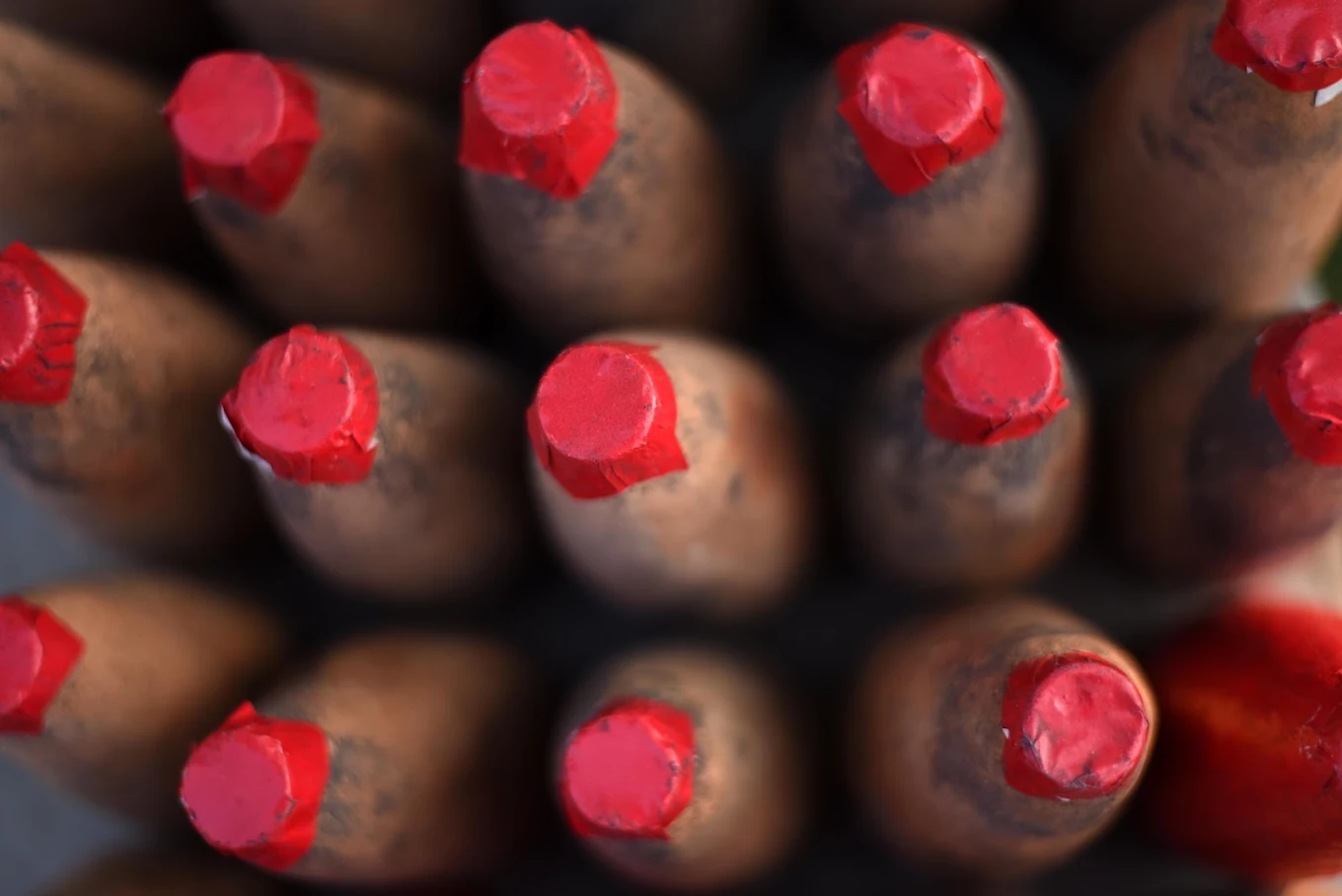
The historical account identifies Lakshiram Pathak of Majorhati as the founder of Barpeta's traditional fireworks industry.
In 1885, Pathak is said to have studied a Bengali book describing Chinese fireworks techniques. The knowledge became the foundation for his own experiments and craftsmanship.
According to the source account, Pathak's craftsmanship attracted the attention of Queen Victoria, who awarded him a gold medal and granted land for the development of his venture.
The craft subsequently expanded through Pathak's descendants and other members of the Pathak family, helping establish Barpeta as a centre of traditional fireworks production.
The Barpeta units are described as producing approximately 30 to 35 varieties of traditional fireworks.
Among the products named in the source account are Asman Gola, Phuljari, Mata, Fanush and Atom Bomb.
The industry also preserves unusual alphabet-shaped fireworks such as Letter Gash and Cherkhy Gash.
Their distinctive character comes from the hands-on manufacturing tradition that has survived across generations.
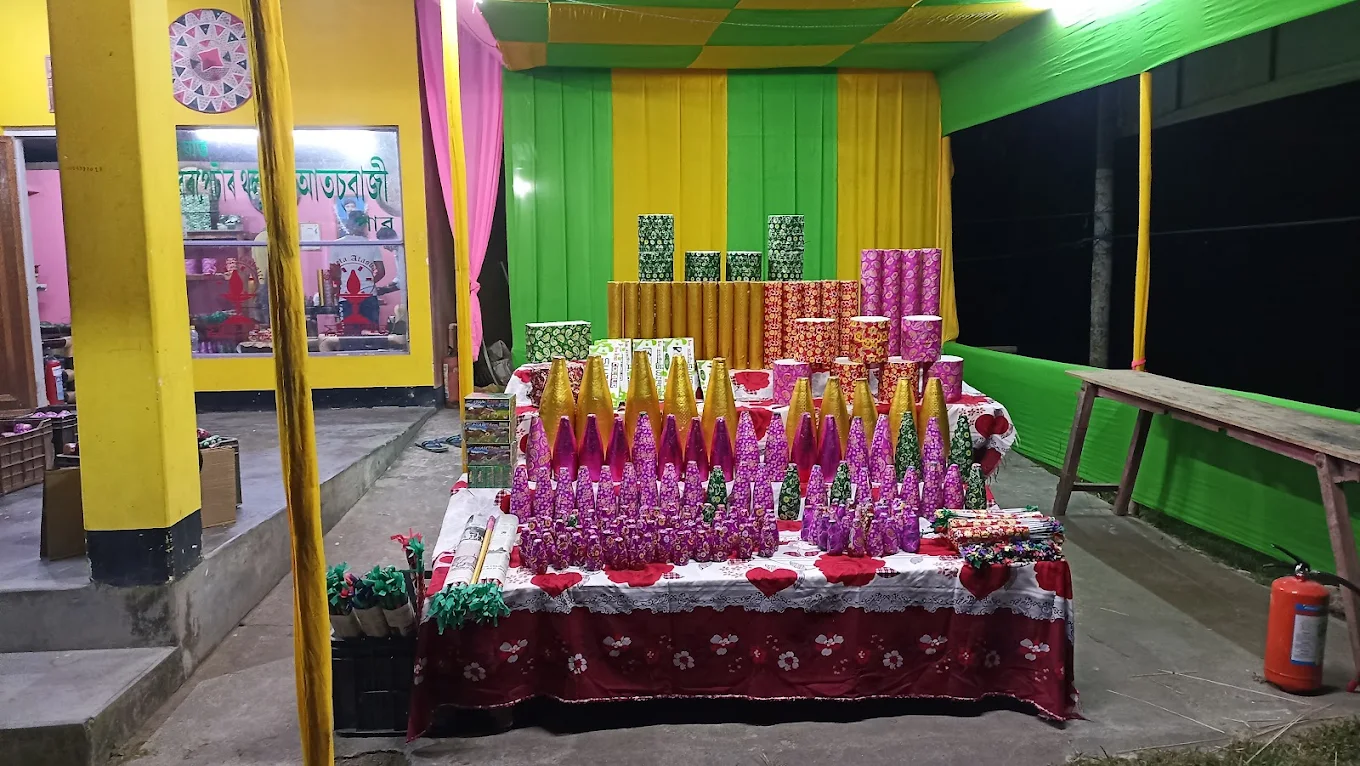
The industry continues to rely heavily on manual labour and traditional production methods rather than modern machinery.
The source account highlights limited marketing and consumer awareness as challenges for an industry competing with larger machine-made producers.
Transportation and connectivity have historically affected the ability of Barpeta's fireworks producers to reach wider markets.
Regulatory requirements, competition from inexpensive imports and limited communication infrastructure remain important challenges for the industry.
The Assam Government has sanctioned ₹7 crore under the Chief Minister's Development Fund for a dedicated Atoshbaji Village across approximately 30 acres.
According to the source account, the planned infrastructure includes space allocated to the individual units and a common facility centre being developed by AIIDC.
The project represents an effort to create infrastructure around an industry whose identity is deeply connected with Barpeta's heritage and traditional craftsmanship.
The Barpeta fireworks industry has also received a dedicated logo from the National Institute of Design, Jorhat.
A distinctive visual identity can help communicate the heritage and individuality of Barpeta's traditional fireworks while building recognition in wider markets.
For a craft industry shaped by more than a century of local knowledge, branding is another way of preserving its story.
Barpeta's Atoshbaji industry represents more than fireworks. It preserves a specialised form of Assamese craftsmanship, supports local livelihoods and connects contemporary festival culture with a history stretching back to the nineteenth century.
The source account identifies strong product quality and heritage value alongside challenges involving modernisation, competition, infrastructure and communication.
With improved infrastructure, connectivity and recognition, the tradition has the potential to reach audiences well beyond its historic home in Lower Assam.
The HowlyTown historical account describes Barpeta's Atoshbaji tradition as approximately 130 years old, with roots in the late nineteenth century.
The source identifies Lakshiram Pathak of Majorhati as the founder of the traditional Barpeta fireworks industry.
The source account identifies five active Atoshbaji units operating in Barpeta.
Atoshbaji Village is a proposed dedicated industrial and infrastructure project for Barpeta's fireworks units. The source reports a ₹7 crore government allocation across approximately 30 acres.
Their distinctive identity comes from traditional handmade production, locally developed varieties and a multi-generational craft tradition associated with Barpeta.
The 130-Year-Old Fireworks Industry of Barpeta

Barpeta, a district in lower Assam known for its rich cultural heritage and Satras, also hides a dazzling secret — a 130-year-old fireworks industry known locally as Atoshbaji. Older than Tamil Nadu’s famed Sivakasi, the Barpeta firework tradition, or Fotoka, as it was once called, remains a shining example of heritage craftsmanship passed down through generations.
Founded by Lakshiram Pathak of Majorhati in the late 19th century, the industry began after Pathak studied a Bengali book on Chinese firework techniques in 1885. His craftsmanship caught the attention of Queen Victoria herself, who awarded him a gold medal and granted him land to grow his venture. Over time, his descendants and other Pathak family members expanded the trade, leading to the formation of five active Atoshbaji units in Barpeta today.
Among these, one of the most prominent and longest-running manufacturers is Lakhiram Atoshbaji Factory, still managed by the descendants of Lakshiram Pathak. Other notable manufacturers include Rajmata Fireworks, Assam Fireworks, Barpeta Sparklers, and Pathak Brothers Atoshbaji, each with its own specialty in crafting traditional fireworks.
Despite its historical roots and popularity during Diwali, marriages, and festivals, the industry still operates on manual labor and lacks modern machinery. These five units handcraft 30–35 varieties of fireworks including Asman Gola, Phuljari, Mata, Fanush, Atom Bomb, and unique alphabet fireworks like Letter Gash and Cherkhy Gash. Their vibrant displays rival machine-made products from Sivakasi and China, yet struggle for visibility due to weak marketing and transportation limitations — Barpeta still lacks a railway station.
To boost this cottage industry, the Assam government sanctioned ₹7 crore under the Chief Minister’s Development Fund to build a dedicated Atoshbaji Village across 30 acres, with each unit receiving two acres. Infrastructure is being developed by AIIDC, including a common facility centre. Additionally, the Barpeta fireworks have now been granted a logo by the National Institute of Design, Jorhat, offering a unique brand identity to help establish their market presence.
The industry not only preserves Assamese artisanal skill but also supports local employment and rural livelihood. However, competition from cheap imports, lack of awareness among consumers, and regulatory bottlenecks pose challenges. The SWOT analysis indicates strong product quality and heritage value but highlights threats from modernization gaps and lack of communication infrastructure.
Barpeta’s firework units continue to glow, quite literally, with potential. With government backing, improved connectivity, and brand promotion, this age-old industry can reclaim its rightful place in India’s festival economy — not just as a regional gem, but as a national pride.
