01
Raas Leela
Krishna's divine play is interpreted through movement, expression, music and theatrical storytelling.
Raas Purnima and the Raas Mahotsav of Majuli transform the river island into a living stage where the story of Lord Krishna unfolds through devotion, music, dance, theatre and the enduring artistic traditions of Assam.
In Majuli, Raas Purnima is more than a festival date. It is a cultural moment when sacred narratives move from scripture and tradition into music, dance, theatre, ritual and visual storytelling. Across the island's Satras, community spaces and temporary stages, the life of Lord Krishna is interpreted through the performing arts.
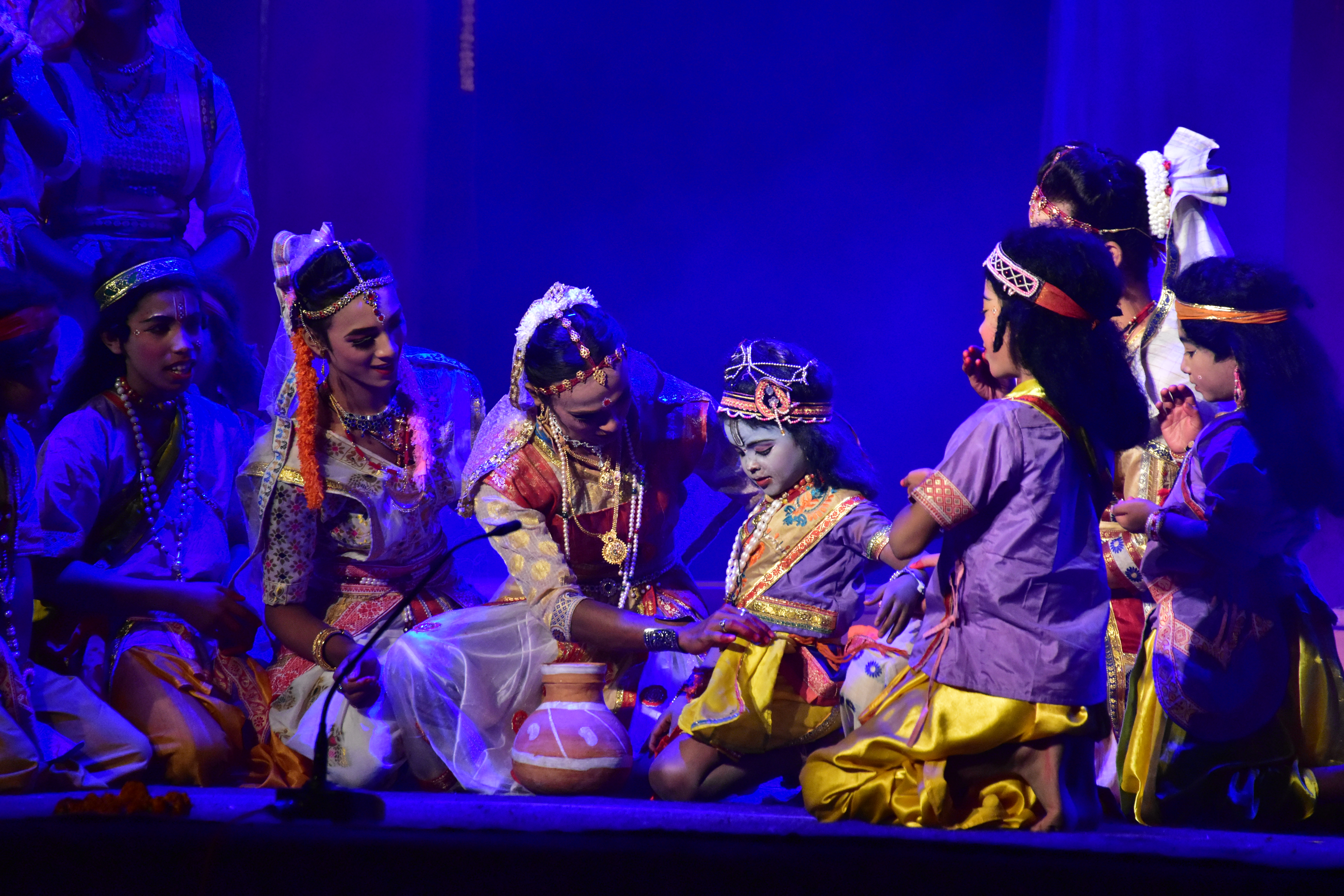
Set within the Brahmaputra, Majuli is internationally recognised for its distinctive cultural landscape and its Satras — institutions that have preserved important traditions of Assamese Neo-Vaishnavite culture.
Sattriya dance, music, Bhaona theatre, mask-making, manuscripts, handicrafts and devotional practices form part of this living cultural environment. During Raas Purnima, these traditions converge around the story of Krishna, creating one of the island's most distinctive annual cultural experiences.
Raas Mahotsav presents the life of Lord Krishna through a powerful combination of ritual and performing arts. Birth, childhood, pastoral life, divine encounters, dramatic episodes and the Raas with the Gopis become part of an immersive cultural narrative.
Krishna's divine play is interpreted through movement, expression, music and theatrical storytelling.
Assam's classical dance tradition forms an important artistic language within the island's Vaishnavite heritage.
Traditional religious theatre transforms sacred stories into accessible dramatic performances for the community.
Devotional music, instruments, chanting and ritual practices create the atmosphere surrounding the performances.
Assam Tourism describes the development of Raas in Majuli as a meeting point between ritual practice and theatrical expression. The tradition evolved from Raas Puja into elaborate presentations incorporating dance, music and drama, allowing audiences to experience Krishna's story as both spiritual observance and performing art.
The history of Raas in Majuli is inseparable from the history of its Satras. Government of Assam sources associate an early full ritual Raas Leela tradition with Dakhinpat Satra, while the later stage form is associated with Garamur Satra.
Government tourism material records an early Raas Leela tradition at Dakhinpat Satra, where the festival developed from a Vedic system of Raas Puja into a richer performing tradition.
Pitambar Dev Goswami of Garamur Satra is associated with the development of Raas Leela as a stage performance in 1934, creating a format that allowed theatrical storytelling to become an important part of the festival.
Raas is no longer confined to the Satra institution. Performances and celebrations take place in community halls, temporary pandals, Naamghars and villages, making Raas Purnima a wider cultural celebration across Majuli.
Majuli's Satras are more than historic institutions. They continue to function as centres of prayer, learning, performance, music, art and community life.
One of the most important centres associated with Raas traditions in Majuli and known for its distinctive ritual and performance heritage.
A historic centre of Sattriya culture and performing arts, with Raas among its major annual traditions.
Known for its connection with art, culture, literature, classical studies and the wider Sattriya tradition.
An important Satra with collections of Assamese artefacts and a continuing programme of religious and cultural observances.
A significant cultural institution associated with antiques, manuscripts and the performing arts.
Particularly recognised for Majuli's distinctive tradition of traditional mask-making for performance.
Raas Mahotsav is an extraordinary window into Majuli, but the island's cultural identity extends far beyond one festival.
Visitors encounter Sattriya dance, Bhaona theatre, mask-making, handloom traditions, pottery, music, village life and the hospitality of communities that continue to maintain these traditions.
Visit historic institutions such as Dakhinpat, Garamur, Auniati, Kamalabari and Bengenaati.
Experience Krishna's story through traditional dance, theatre, music and devotional performance.
Explore Majuli's traditions of mask-making, pottery, weaving, musical instruments and handmade crafts.
Spend time in the villages and experience the distinctive rhythm of life along the Brahmaputra.
Majuli is connected to Jorhat by regular ferry services. Nimati Ghat is the principal ferry connection for travellers heading to the island.
Raas Purnima and Raas Mahotsav are major Vaishnavite cultural celebrations in Majuli centred on the life and stories of Lord Krishna. They combine ritual, dance, music, theatre, Bhaona and traditional performing arts.
The 2026 Raas Leela festival in Majuli is scheduled for 24 November to 26 November 2026.
Raas Leela is performed at several Satras and also at community halls, temporary festival stages, Naamghars and villages across the island.
Dakhinpat Satra has an important historical association with Raas traditions in Majuli, while Garamur Satra is particularly associated with the development and presentation of stage Raas Leela.
Raas Leela presents episodes from Lord Krishna's life, including his birth, childhood in Gokula, pastoral life, encounters with demons, the killing of Kamsa and the Raas with the Gopis.
Its distinctive character comes from the meeting of Vaishnavite spirituality and Assam's performing arts. Ritual, Sattriya dance, music, Bhaona, theatre, masks and community participation all contribute to the festival experience.
Majuli is accessible by regular ferry services from Nimati Ghat near Jorhat. Jorhat is the principal gateway for travellers heading to the island.
Raas Purnima is a celebration where faith becomes art, history becomes performance and a river island becomes a stage for one of Assam's most enduring cultural traditions.