Madan Mohan
Kirtanghar
One name carrying centuries of memory.
Madan Mohan Kirtanghar is more than a place of prayer. It represents an important layer of Howly's historical, spiritual and cultural identity.
Its story connects the Koch Kingdom, King Nara Narayan, Chandi Narayan Baruah, the Vaishnavite traditions of Assam and the living community of Howly.
A connection with the Koch Kingdom.
The present day Howly region was once part of the Koch Kingdom. Because of this historical connection, the story of Howly carries memories associated with the Koch rulers and their religious traditions.
King Nara Narayan was a devoted worshipper of Madan Mohan. He established the famous Madan Mohan Temple at Cooch Behar.
Nara Narayan later spent twelve years in the region after establishing it as a secondary capital.
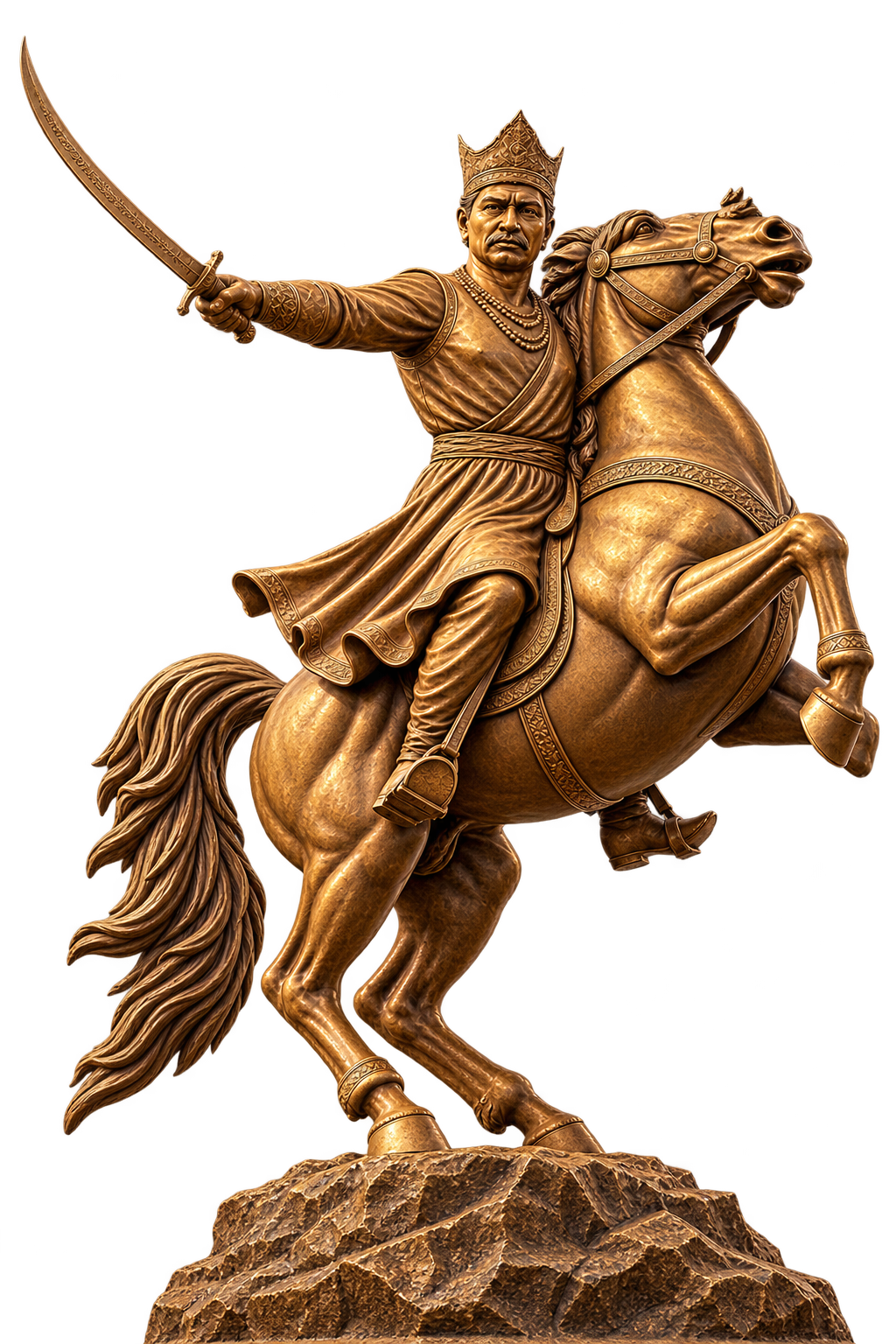
The memory of Madan Mohan.
King Nara Narayan's devotion to Madan Mohan established a powerful historical association between the deity and the Koch royal tradition.
That memory later became connected with Howly through its own historical figures and places of worship.
Chandi Narayan Baruah
Chandi Narayan Baruah, a distinguished figure associated with Howly and the Ahom administrative tradition, was also a devotee of Madan Mohan.
In the historic Howly area, a Madan Mohan temple once stood within the compound of Chandi Narayan Baruah's four pura land estate.
There, he worshipped Madan Mohan, creating another important connection between the deity and the history of Howly.
A difficult chapter.
In 1823, during the third Burmese invasion, Chandi Baruah's estate and the Madan Mohan temple associated with it were destroyed.
A structure can disappear. Memory can remain.
Although the historic temple was destroyed, the memory of Madan Mohan continued to remain part of Howly's cultural consciousness.
A memory uncovered.
In 1943, while digging a well at Baruah Bazar in Howly, the late Narayan Das reportedly discovered several objects beneath the ground.
Some of the recovered objects were believed to have been associated with the historic Madan Mohan temple connected with Chandi Baruah.
The discovery added another layer to the enduring memory of Madan Mohan within Howly's history.
1978
To preserve the sacred memory of Madan Mohan within Howly's history, Madan Mohan Kirtanghar was established in central Howly in 1978.
The Kirtanghar was established beside Howly Raas Mandir as a central place of devotion, prayer and community gathering.
Its historical symbolism connects the devotional traditions associated with King Nara Narayan and Chandi Narayan Baruah with the living religious culture of modern Howly.
Experience the sound.
The visual comes alive as you enter this section. Choose when to hear the accompanying sound.
Listen to the atmosphere.
The film begins when you reach this moment in the story.
A place of faith. A place of community.
Vaishnavite Heritage
Howly has long been associated with the Vaishnavite and Mahapurushiya traditions of Assam.
Central Namghar
Established beside Howly Raas Mandir in 1978, Madan Mohan Kirtanghar serves as an important central place of prayer and community gathering.
Founding Leadership
Dr. Surendra Nath Das served as the founding president, while Dr. Debendra Nath Das served as secretary.
Foundation Stone
The foundation stone was laid by Chandrakanta Mishra, then Bura Satradhikar of Barpeta Satra, and Swami Krishnananda Brahmacharyadev.
Gateways carrying memory.
The main entrance gateway of Madan Mohan Kirtanghar was built by the late Birinchi Choudhury, a prominent businessman of Howly, in memory of his father Biraja Nath Choudhury and his mother Benu Choudhury.
Another gateway on the southern side of the Kirtanghar was commissioned by Hitendra Das in memory of his father, the late Sadananda Das, a respected teacher of Howly.
These structures transform the architecture of the Kirtanghar into a record of personal memory and community contribution.
Built by the people of Howly.
A management committee was formed by the community to oversee the activities and administration of Madan Mohan Kirtanghar.
The Howly Raas Mahotsav Celebration Committee has also contributed periodically towards the development of the Kirtanghar's infrastructure.
Its continued presence reflects the collective participation of Howly's people in preserving their religious and cultural spaces.
When Howly comes alive. The Raas season.
During the Howly Raas Mahotsav, the premises of Madan Mohan Kirtanghar receive thousands of visitors and devotees.
Together with Howly Raas Mandir, the Kirtanghar becomes part of one of the town's most important annual cultural and devotional gatherings.
A tradition that continues throughout the year.
Public Palnaam
Howly's annual public Palnaam is held in the courtyard in front of Madan Mohan Kirtanghar.
Community Gathering
People from villages across Howly gather at the Kirtanghar to participate in the annual devotional programme.
Srimanta Sankardeva
The Avirbhav Tithi of Mahapurush Srimanta Sankardeva is observed at Madan Mohan Kirtanghar with a day-long programme every year.
Howly Raas Mandir and Madan Mohan Kirtanghar.
Located within the same campus, Howly Raas Mandir and Madan Mohan Kirtanghar together form an important sacred space for devotional listening, prayer and the singing of Krishna's divine stories.
Their shared presence makes this part of Howly an important centre of religious and cultural life.
Madan Mohan Kirtanghar.
Its story connects devotion, history, architecture, community and memory across generations of Howly.
Today, Madan Mohan Kirtanghar remains part of the living cultural landscape of Howly.
Explore HowlyTown →