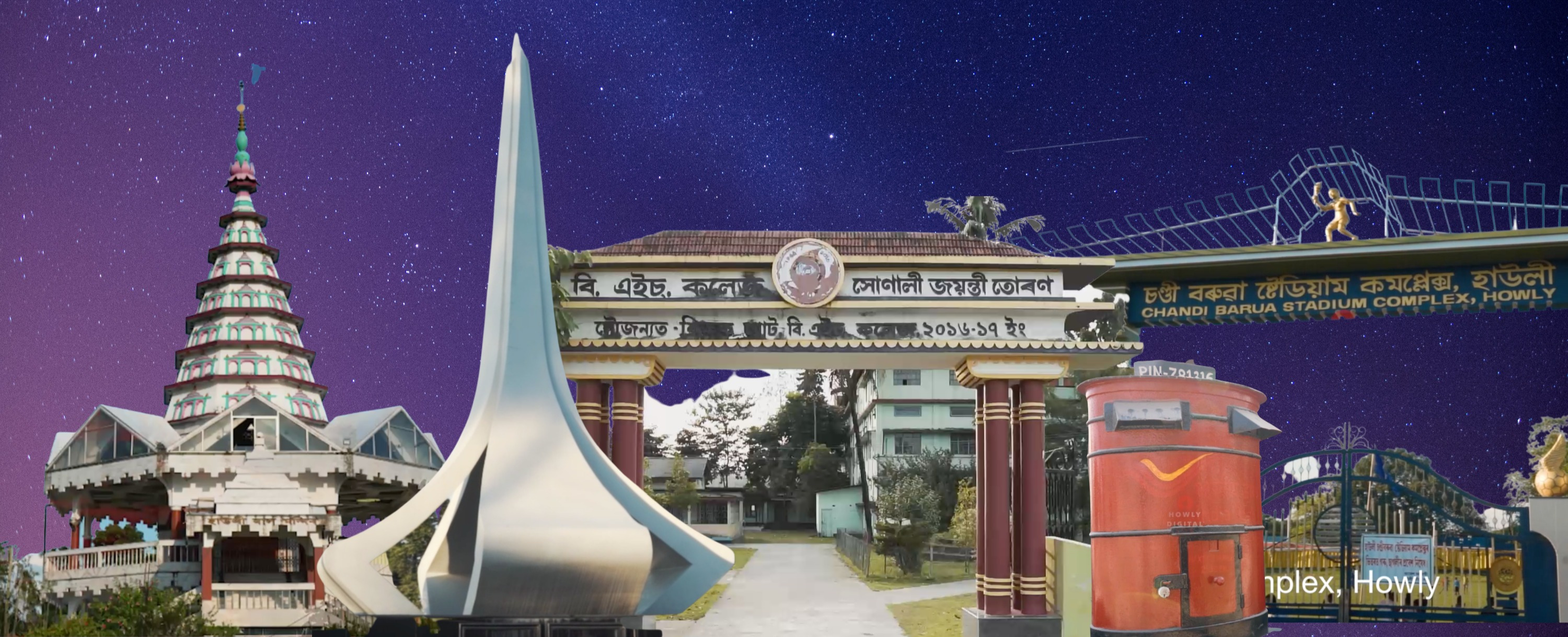
The Origin of Howly
A journey through names, kingdoms, memory, destruction and rebirth — tracing the story behind one of Assam's historic towns.
Not just a name.
A living memory.
The name Howly is not rooted in ancient times, though it bears echoes of history. Earlier records do not mention Howly itself, but rather refer to a term associated with royal and noble circles — Raajhowly.
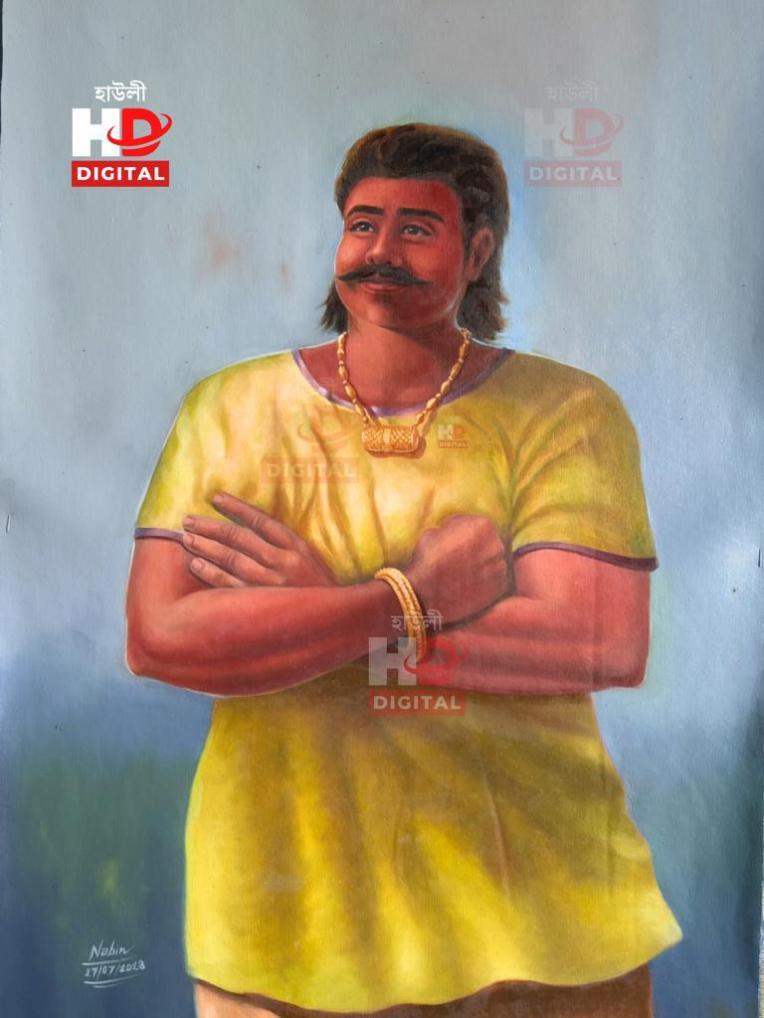
The name begins with Raajhowly.
The word was closely associated with the nobleman Roja Chandi Baruah. Over generations, language and local memory gradually transformed Raajhowly into the simpler name remembered today: Howly.
The year
1563
In the year 1563, Roja Naranarayan of the Koch kingdom, after successfully conquering parts of the Ahom territory, returned from Garhgaon and its capital with not just victory but vision.
With him came groups of skilled artisans — metalworkers, potters, goldsmiths, weavers and other communities whose hands helped shape the culture of the time.
These craftsmen were settled across four newly founded towns in the Kamrup region: Barnagar, Nabanagar, Bhawanipur and Kaljhar.
Over time, Nabanagar, the town built by Roja Naranarayan, came to be known as Howly — a transformation shaped by years of usage, language and local memory.
A name
missing
from the records
Interestingly, in the religious and cultural histories of the Sankari era, as well as in official records of Roja Naranarayan's reign, there is no mention of Howly by name.
Historical texts instead refer to places such as Ghilaanagar, Bijoynagar, Barnagar, Kaljhar, Bhawanipur, Nabanagar, Yugirpam and Sathijana, among others.
This absence makes the later appearance of the name Howly particularly significant.
Howly enters
literature
By the late nineteenth century, the name Howly begins to surface in literature.
In Rajanikanta Bordoloi's novel Manomoti, written before the devastating earthquake of 1897, Howly is mentioned alongside places such as Holapakuri, Yugirpam, Nagarjhar, Baruahbari, Ghilajhar and Barbarijhar.
This provides an important glimpse into the growing presence of Howly within the regional imagination before the great earthquake.
The historical timeline
From kingdoms and settlements to destruction and renewal.
Koch Kingdom
Roja Naranarayan returns from Garhgaon and establishes important settlements, including Nabanagar.
Raajhowly
Chandi Baruah is traditionally associated with a noble residence or administrative seat known as Raajhowly.
The Burmese Invasion
During the Burmese invasion, much of the ancient Howly region was ravaged and reduced to ruin.
Treaty of Yandaboo
British administrative influence expanded across Assam, changing the region's infrastructure and connections.
Dak Bungalow
A dak bungalow was established in Halapakuri Gaon, reflecting the region's growing importance within colonial infrastructure.
Howly Gaon Sabha
The founding of the Howly Gaon Sabha marks an important stage in the civic development of the town.
The Great Earthquake
The devastating earthquake becomes a major turning point, destroying older structures and beginning another chapter in Howly's development.
The Dark Age of Howly
Following the destruction of Chandi Baruah's estate and much of the surrounding region, a long period of loss and transformation settled over Howly. The years between 1823 and the great earthquake of 1897 are often described as the “Dark Age” of Howly.
Life before
1897
Despite the absence of extensive records, Howly and its neighbouring areas were home to thriving settlements well before 1897.
Literary and historical clues suggest a bustling and culturally rich region.
Religious institutions such as Kaljhar Satra, Parabhanga Satra and Ghilajari Satra had existed before the earthquake and were later relocated because of the devastation.
Areas including Ghilajari, Nagorjhar, Halapakuri and Borborijhar formed part of a connected network of Assamese rural settlements.
Destruction
became rebirth.
The 1897 earthquake was not simply an ending. It marked a turning point. The region entered a new phase of sociocultural development, while numerous nearby settlements began to flourish.
The making of
modern Howly
Following the earthquake, numerous nearby hamlets began to flourish, including Moiramara, Dhalagaon, Madulijhar, Majorgaon and Jaljali.
At the same time, newer settlements such as Dhakaliyapara, Bagaijanpara, Kumullipara, Baniyarapara, Dabaliyapara, Khandakarpara, Hajipara, Phulkipara and Yasihatipara emerged.
Together, these settlements formed part of the foundation of what would become modern Howly.
A name.
A memory.
A town.
The story of Howly is not contained in one date, one document or one name. It lives across centuries of settlement, memory, destruction, literature, culture and the people who continued to call this place home.