History of Barpeta, Assam | Barpeta Satra, Madhavdeva & Barpetar Buranji | HowlyTown
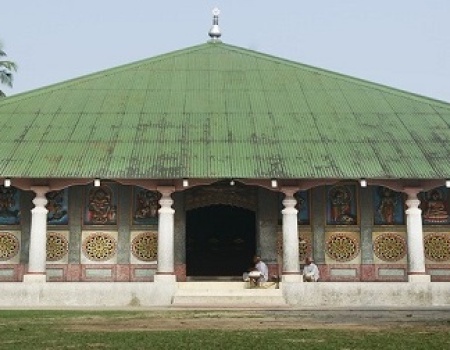
Barpeta Kirtan Ghar, Assam
HOWLYTOWN · ASSAM

The History of
Barpeta

A journey through the satras, saints, rivers, culture and movements that shaped one of Assam's most important historical landscapes.

Based on Barpetar Buranji by Digambar Das
Digitally preserved by www.howlytown.in
SCROLL
BARPETA · ASSAM

Not simply a town.
A living archive.

Barpeta occupies a distinctive place in the history of Assam. Its identity was shaped by the rise of Vaishnavite Sattriya culture, the work of Srimanta Sankardeva and Mahapurush Madhavdeva, the growth of the satra institution, and generations of communities who built their lives around these religious and cultural centres. The region also carries memories of rivers, agriculture, migration, colonial administration, peasant movements and India's freedom struggle. Barpeta's history is therefore not a single story. It is a meeting point of faith, literature, music, performance, community life and political change.
1583
Traditional historical dating associated with the founding of Barpeta Satra by Madhavdeva.
1841
Barpeta became a Civil Sub-Division under British administration.
1942
The Quit India Movement became another important chapter in Barpeta's history.
01 Before Barpeta

A place with many names

The historical identity of Barpeta predates the modern name by many centuries. Historical accounts associate the region with names including Tatikuchi, Porabhita, Mathura, Vrindavan, Choukhutisthan, Nabaratna-Sabha, Icchakuchi, Pushpak Vimana, Kampur and Barpeta.

The wider region passed through successive historical periods associated with the Varmans, Salasthamas, Palas, Kamatas and Koches. During the Kamata and Koch periods, local Bhuyan chiefs and their settlements formed part of the political and social landscape.

Over time, the region became increasingly connected with the spread of Vaishnavism associated with Srimanta Sankardeva, creating a cultural transformation whose influence would become particularly strong in Barpeta.

Before Barpeta became a town, it was already a landscape of memory.

02 Sankardeva

The Vaishnavite transformation

The cultural history of Barpeta cannot be separated from the extraordinary religious and cultural movement associated with Srimanta Sankardeva.

Sankardeva's Ekasarana tradition placed devotion, community prayer, literature, music, drama and artistic expression at the centre of social and religious life.

The satra became far more than a monastery. Across Assam, these institutions developed into centres where religion, education, music, dance, drama, literature, visual arts and community life could exist together.

Barpeta's cultural landscape was deeply influenced by Sankardeva and his disciples, particularly Madhavdeva, Harideva and Damodardeva.

03 Madhavdeva

Madhavdeva and Barpeta Satra

Among the most important chapters in Barpeta's history is the arrival and work of Mahapurush Madhavdeva.

The Barpeta Satra was founded by Madhavdeva in 1583, according to traditional historical accounts. It became one of the principal centres of Vaishnavite culture in Assam.

The institution grew under the leadership of Mathuradas Burha Ata, Madhavdeva's principal disciple and the first Satradhikar of Barpeta Satra.

The satra's development was not restricted to religious practice. Communities of artisans, culture-workers and other skilled people settled around it, creating neighbourhoods or hatis and contributing to the growth of the wider settlement.

THE BARPETA SATRA

A spiritual institution that became a cultural world of its own.

The Kirtan Ghar, Nam-Prasanga, devotional music, community administration and associated cultural practices made Barpeta Satra one of the defining institutions of the region.

04 The Satra City

A network of satras

Barpeta's cultural importance extends beyond the Barpeta Satra itself.

The surrounding region contains a remarkable network of historic satras, including Patbaushi Satra, Ganakkuchi Satra, Sundaridiya Satra, Jania Satra, Baradi Satra and Satra Kanara.

Together, these institutions created a connected cultural landscape in which devotional practice, learning, music, performance and community traditions were preserved and transmitted across generations.

01 · PATBAUSHI

Sankardeva's creative years

Patbaushi Satra is associated with an important period of Sankardeva's creative life and the development of Assamese literature, music and Sattriya culture.

02 · GANAKKUCHI

Madhavdeva's centre

Ganakkuchi Satra was founded by Madhavdeva and became one of the important seats of Vaishnavite faith in the Barpeta region.

03 · SUNDARIDIYA

A centre of learning

Sundaridiya Satra became another important centre associated with Madhavdeva and the growth of Vaishnavite learning and devotional practice.

04 · BARADI

Culture spreading outward

Baradi Satra became another centre through which the Sankardeva-Madhavdeva tradition continued to spread.

05 Barpeta Satra

Inside the Kirtan Ghar

The physical architecture of Barpeta Satra reflects its institutional importance.

The complex includes the Kirtan Ghar, Manikut or Bhajghar, Doulgriha, Jogmohan Griha, Rangamancha, Adhayanagar, guest houses and other structures.

The main Kirtan Ghar is the central space for Nam-Kirtan and prayer. The wider complex also functioned as a place where devotees discussed community affairs and where cultural practices were maintained.

One of the best-known traditions associated with the Bhajghar is the Akshay Banti, a continuously burning lamp associated with the long devotional tradition of the Satra.

The satra was not only a place of worship. It was a way of organising community life.

06 Doul Utsav

When Barpeta comes alive

Among Barpeta's most celebrated traditions is Doul Utsav, the Assamese form of the festival of colours.

At Barpeta Satra, Doul is not simply a festival of colour. It combines devotional singing, music, performance, ritual and community celebration.

The celebration is traditionally observed over multiple days and attracts large numbers of devotees and visitors. Traditional songs are accompanied by khol, cymbals and other musical instruments, creating one of the most distinctive festival atmospheres in Assam.

The festival demonstrates how religious traditions can become living cultural expressions passed from one generation to another.

07 Colonial Barpeta

A new era under British rule

The arrival of British administration introduced a different political and administrative structure to the Barpeta region.

Historical accounts record that Barpeta became a Civil Sub-Division in 1841, with John Batlor serving as its first administrator.

British land-revenue policies subsequently contributed to unrest among sections of the rural population. Peasant unrest intensified during 1893–94, particularly in the Bajali and Sarukhetri areas.

The Lachima uprising is remembered as an important example of peasant resistance against British rule in the region.

08 Freedom Movement

Barpeta in the freedom struggle

The history of Barpeta also forms part of the wider story of India's struggle for independence.

Local participation in the freedom movement became another important chapter in the region's modern history.

During the Quit India Movement of 1942, Madan Chandra Barman and Rauta Koch are remembered in the district's historical record in connection with the movement.

Two important national leaders also visited Barpeta: Mahatma Gandhi in 1934 and Jawaharlal Nehru in 1937.

The history of Barpeta is also a history of people who chose to participate.

09 Land & Rivers

A history written by water

Barpeta's history has always been shaped by its geography.

The region belongs to the alluvial landscape of western Assam, where rivers, wetlands and changing channels have influenced settlement, agriculture, transport and trade.

The wider Barpeta region is associated with rivers including the Manas, Beki, Chaulkhowa, Kaldia, Pahumara, Nakhanda and Palla.

These waterways were not simply geographical features. They were routes through which people, goods, ideas and cultural traditions moved.

Floods and erosion have repeatedly reshaped the landscape, making the relationship between Barpeta's people and its rivers an essential part of its historical identity.

10 Through Time

Barpeta through time

A few milestones help reveal the scale of Barpeta's historical journey.

Ancient–Medieval

Successive dynasties

The wider region experienced successive periods associated with the Varmans, Salasthamas, Palas, Kamatas and Koches.

16th century

The Vaishnavite transformation

The influence of Srimanta Sankardeva and Madhavdeva helped transform Barpeta into a major centre of Ekasarana Vaishnavite culture.

1583

Barpeta Satra

Traditional historical accounts place the founding of Barpeta Satra by Madhavdeva in 1583.

1841

Civil Sub-Division

Barpeta became a Civil Sub-Division under British administration.

1893–94

Peasant unrest

Land-revenue policies contributed to unrest in parts of the region, including the Lachima uprising.

1934

Gandhi in Barpeta

Mahatma Gandhi visited Barpeta during his wider engagement with Assam.

1937

Nehru in Barpeta

Jawaharlal Nehru also visited Barpeta during the period of India's freedom struggle.

1942

Quit India Movement

Barpeta became part of the wider Quit India Movement, forming another important chapter in its modern history.

11 Living Heritage

The past is still present

Barpeta's historical importance is not confined to old buildings, manuscripts or dates.

It survives in the sound of the khol and cymbals, in Nam-Prasanga, in the architecture of the Kirtan Ghar, in Doul Utsav, in Sattriya traditions and in the communities that continue to maintain these practices.

The satras of Barpeta represent one of Assam's most distinctive cultural institutions: places where spiritual practice became intertwined with music, literature, performance, education, craftsmanship and community organisation.

This is why Barpeta is more than a historical destination.

It is a living cultural landscape.

BARPETAR BURANJI · HOWLYTOWN

A history worth remembering.

From the satras of the Vaishnavite movement to the people, rivers, festivals and movements that shaped modern Assam, Barpeta remains one of the region's most important historical landscapes.

HISTORICAL SOURCE

Historical source: Digambar Das

This historical presentation of Barpeta is based on Barpetar Buranji by Digambar Das, a historical work documenting the history, geography, culture, communities and important events associated with Barpeta and its surrounding region.

The material has been digitally presented and adapted for a wider audience by www.howlytown.in as part of its ongoing effort to document and preserve the history, heritage and cultural memory of Howly, Barpeta and Lower Assam.

Original historical author: Digambar Das

Book: Barpetar Buranji

Digital presentation & archive: www.howlytown.in